 ultimate-guide
Are AI Health Insights Reliable? A 2026 Guide
Table of Contents
- What Makes AI Health Insights Reliable (or Not)
- AI Health Predictions from Wearables: What the Sensors Can and Cannot See
- How to Interpret Health Metrics Without Overreacting
- AI Health App Privacy: What Happens to Your Data
- AI vs Doctor Health Advice: When Each One Belongs
- Independent Validation and Evidence Quality: How to Check the Claims
- Practical Safeguards for Using AI Health Insights
- Frequently Asked Questions
Last Updated: October 13, 2026
What Makes AI Health Insights Reliable (or Not)
AI health insights are reliable when accurate for a defined task, validated on real-world populations, transparent about their limits, and paired with human oversight. They become unreliable when a wellness signal is mistaken for a medical diagnosis, the key distinction before trusting any number on your wrist.
At eeMeds, we build around that boundary: our eeMeds™ system unifies wearables, labs, medications, mood, sleep, and activity data into one whole-person picture, then routes anything clinical to licensed professionals through eeTeleHealth Plus™.
The difference between a wellness insight and a medical diagnosis
A wellness insight is a pattern observation: your resting heart rate runs higher on weeks when your sleep drops below your baseline.
Consumer apps operate in the first category; regulated medical devices in the second, carrying a different burden of proof: clinical validation, regulatory review, and documented performance on the population they serve.
Confusing the two is where harm happens. A wearable flagging an irregular rhythm is a prompt to seek care, not a diagnosis.
AI Health Predictions from Wearables: What the Sensors Can and Cannot See
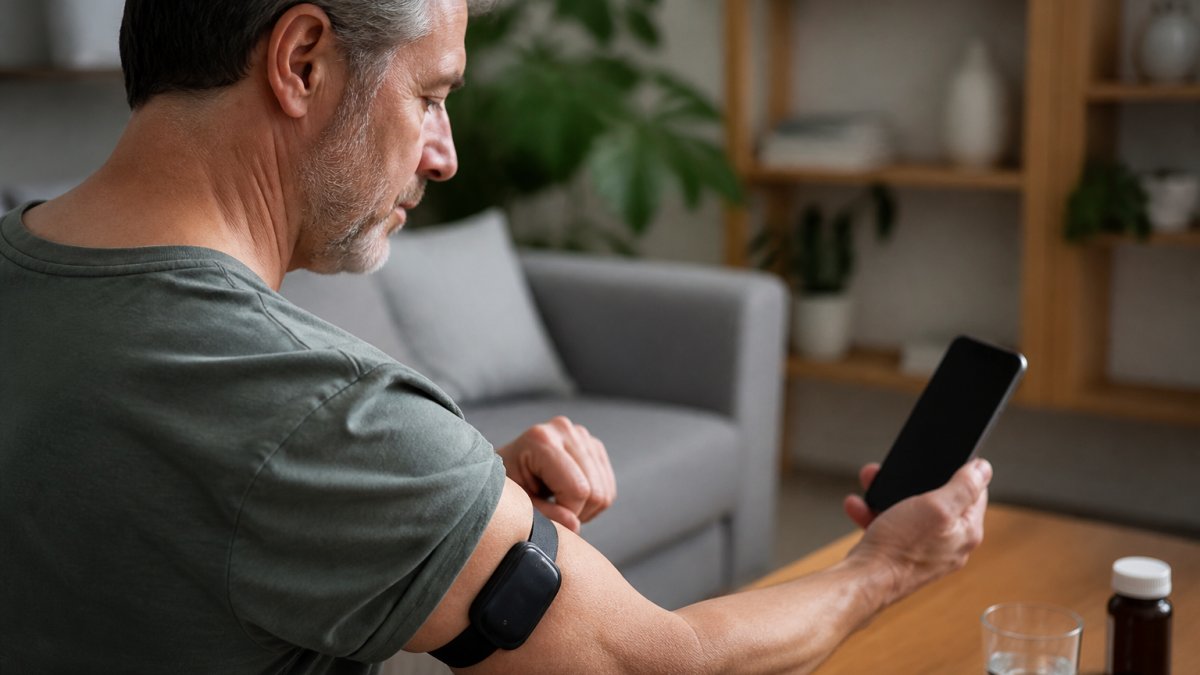
Wearables measure a narrow set of physical signals and infer the rest. A wrist sensor captures movement, blood flow, and sometimes electrical activity; algorithms then estimate sleep stages, heart rate variability, stress load, and recovery.
What they cannot see matters just as much:
- Context. A spike in heart rate could be a workout, an argument, or a fever. The sensor sees the spike, not the reason.
- Conditions outside the training population. Performance often degrades for people whose physiology, age, or health status differs from the data the model learned from.
- Causation. A correlation between poor sleep and elevated stress tells you the two move together, not which one drives the other.
Behavioral Driver Analysis™ closes this gap by layering in the personal context that explains why a pattern is showing up, rather than reporting a metric in isolation.
How to Interpret Health Metrics Without Overreacting
Read a health metric against your own baseline over time, not a population average or a single day's reading. Metrics describe patterns, rarely emergencies.
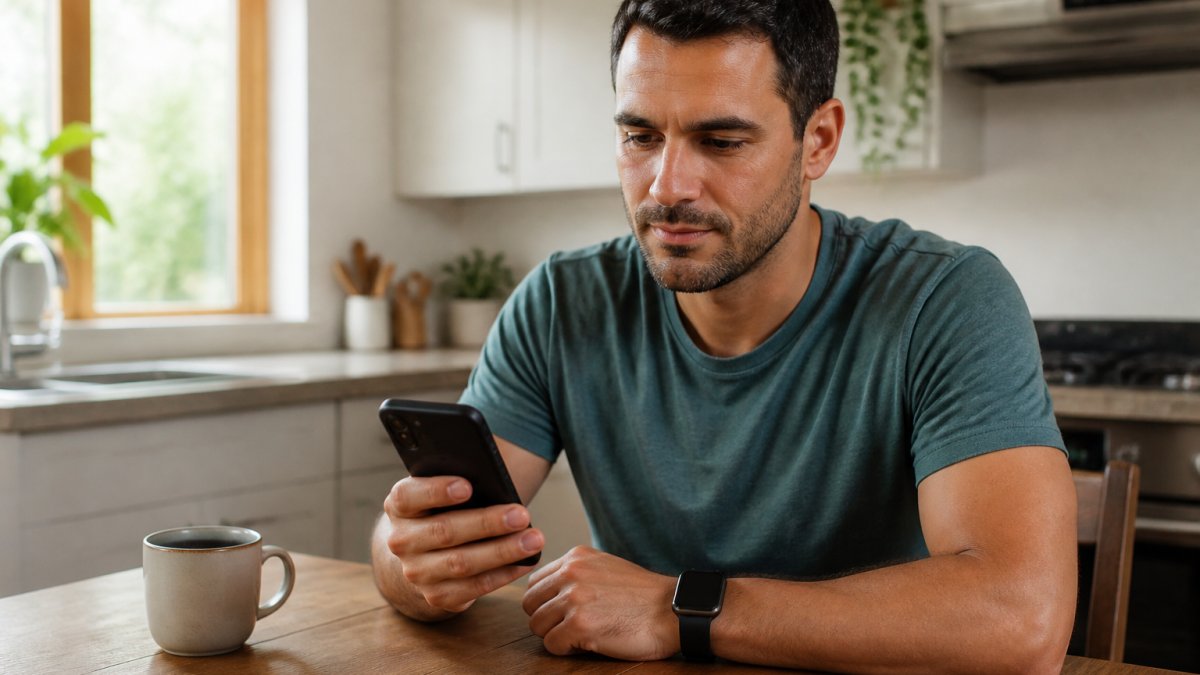
Start with direction: is the trend rising, falling, or flat over several weeks? Then duration, two days is usually noise, two weeks is a signal. Finally context: travel, illness, alcohol, a new medication, or stress can all move the numbers without anything being wrong.
Accuracy, precision, and what those percentages actually mean
Accuracy is how close a measurement is to the true value; precision is how consistently the tool produces the same result. A device can be precise but inaccurate, giving the same wrong answer every time.
When you see a percentage attached to an AI claim, ask three questions:
| What the claim says | What to check | Why it matters |
|---|---|---|
| "Detects condition X" | Sensitivity and specificity | High sensitivity with low specificity means many false positives |
| "Validated" | Who validated it, on whom, and how | A study on healthy adults may not transfer to your situation |
| "Accurate" | Compared with what reference standard | Accuracy against a clinical test is stronger than against another app |
A high accuracy rate on a narrow population is not the same as reliability for you.
The metrics that actually determine reliability
Most consumer AI health tools report a single accuracy number, which is nearly meaningless without its companion metrics.
Sensitivity (recall) is the proportion of actual positive cases the tool correctly identifies.
Specificity is the proportion of actual negative cases correctly identified as negative.
False positives and false negatives are the practical consequences of sensitivity and specificity.
Calibration describes whether the tool's confidence matches reality.
How to read a validation study without a statistics degree
You do not need to be a researcher to spot weak evidence. Look for:
- Population match. Were participants similar to you in age, sex, health status, and medications? A study on elite athletes may not apply to someone with a chronic condition.
- Reference standard. What was the AI compared against? A clinical diagnosis from a physician is a strong standard; another app's output is weak.
- Prospective vs. retrospective. Prospective studies follow people forward in time and are stronger than retrospective analyses of existing data.
A common pattern: a company cites an internal study with impressive numbers but no external validation. That is a yellow flag, treat the claim as preliminary.
What to do when the numbers conflict
Your wearable says your heart rate variability is dangerously low. Your app says your sleep is fine. Your lab portal shows a borderline result. These conflicts are normal because each tool measures a different signal with different error rates.
When metrics disagree, prioritize:
- Clinical measurements over consumer estimates. A lab test or a clinician's exam outranks a wrist sensor.
- Trends over single readings. A consistent pattern across weeks matters more than one outlier.
- Symptoms over numbers. How you feel is real data; a metric that contradicts how you feel deserves a professional's review.
- Validated tools over unvalidated ones. A regulated device with published performance data carries more weight than a general wellness app.
The goal is not to become a statistician, but to ask the right questions so you can decide when a number deserves action and when it deserves patience.
AI Health App Privacy: What Happens to Your Data
Health data is among the most sensitive personal information, and where it flows determines your real exposure.
Practical checks that take five minutes:
- Read the privacy policy for the words "share," "partner," and "advertising."
- Confirm whether you can export and delete your data.
- Check whether the app is covered by a health-specific privacy law or only general consumer rules.
The FTC guidance on health privacy and mobile apps is a useful starting point for understanding what companies are required to disclose. Regulations vary by country and change over time, so verify the rules that apply where you live rather than assuming a single global standard.
AI vs Doctor Health Advice: When Each One Belongs
AI belongs in pattern detection, education, and between-visit monitoring. A clinician belongs in diagnosis, treatment decisions, and anything involving medication. Neither replaces the other; the strongest setups use both.
Use AI health insights to understand trends, prepare better questions for an appointment, or catch a change early. Go to a professional when a pattern persists, when symptoms appear, when you are managing a diagnosed condition, or when you are taking prescription medication such as a GLP-1.
What to do when AI advice conflicts with your clinician
Your app flags something your doctor dismissed, or your AI tool suggests a supplement your physician warned against.
First, separate the types of conflict. Not all disagreements are equal:
- AI flags a pattern your clinician did not test for. Common and often useful. Your wearable may detect a sleep or heart rate trend a single office visit would miss. Bring the data to your next appointment as context, not as a challenge.
- AI recommends a treatment your clinician opposes. A red flag. Consumer AI tools are not cleared to recommend treatments, and any such suggestion should be ignored.
- AI contradicts a diagnosis you have received. A clinician's diagnosis is based on examination, history, and validated tests. A consumer app's inference does not override that. If you have doubts, seek a second clinical opinion, not an app's opinion.
Second, gather evidence before you respond. To have an app's insight taken seriously, bring:
- The raw data, not just the app's summary. Screenshots of trends over weeks are more useful than a single alert.
- The app's stated limitations. If the app says it is not a diagnostic tool, say so. This shows you are not overclaiming.
- Your symptoms and context. A pattern plus how you feel is stronger than a pattern alone.
Third, know when to seek a second clinical opinion. If your clinician dismisses a persistent pattern without explanation, or you feel unheard, consult another licensed professional with the same data.
Fourth, never let an app override a clinical instruction. Do not stop, start, or change a prescribed medication because an app suggested it.
A simple decision rule
When AI and a clinician disagree, ask: What is the cost of being wrong?
- If the cost is low, a wellness tweak, a sleep habit, a fitness goal, you can experiment and see what works.
- If the cost is high, medication, a diagnosed condition, an acute symptom, the clinician's judgment takes precedence, full stop.
A useful framing: the wearable sees your body, your journal sees your feelings, your lab portal sees your results, and a connected platform helps you see the whole person. But only a licensed professional can integrate all of that with clinical examination and make a diagnosis.
Independent Validation and Evidence Quality: How to Check the Claims
Independent validation means the tool's performance was tested by researchers without a financial stake, on a population resembling its users. That is a higher bar than internal testing, and the bar worth holding these products to.
How to check a claim in practice:
- Look for a peer-reviewed study, not a press release or a company blog post.
- Identify the reference standard: what was the AI's output compared against?
- Check the population: age, health status, and conditions represented.
- Note the sample size and whether the study was prospective or retrospective.
- Confirm the study is recent enough to reflect the current version of the product.
This is also where consumer AI and regulated medical devices diverge sharply. Guidance from bodies such as the WHO on artificial intelligence in health and the FDA on artificial intelligence in medical devices explains how regulators think about these distinctions.
Practical Safeguards for Using AI Health Insights
Treat AI health insights as a well-informed second opinion, never a first and final one. These safeguards take minutes and prevent most of the ways these tools go wrong.
- Establish your own baseline over at least two weeks before acting on any metric
- Verify that the app's validated population resembles your age and health status
- Confirm how your data is stored, shared, and deleted
The throughline: reliability is something you verify, not assume.
At eeMeds, that handoff is built in. eeMeds™ connects the devices and apps you already use through one intelligence layer, so your sleep, stress, labs, and medication experience sit in a single view rather than five separate ones.
The hard part of AI health tracking is not collecting data.
Frequently Asked Questions
Are AI health insights reliable enough to act on?
It depends on what the insight is for. AI health insights can flag patterns worth discussing, like a gradual sleep decline or a shift in resting heart rate, but they are not a diagnosis. A reliable insight tells you what changed and suggests a next step, not what disease you have. Treat them as a prompt to investigate further, not a final answer.
How accurate are AI health predictions from wearables?
Accuracy varies by what is being measured. Heart rate and step count from wearables are generally consistent with clinical tools, while sleep staging and stress scores are less precise because they infer internal states from movement and heart-rate variability. A prediction is only as good as the sensor data behind it, so check whether the device has been tested against a clinical reference.
Can AI give reliable medical advice?
AI can provide general health information and pattern detection, but it cannot examine you, order tests, or account for your full medical history. For anything involving medication, symptoms that concern you, or a diagnosed condition, a licensed professional is the right source. Use AI to prepare questions and track trends, then bring those to a clinician.
What are the risks of relying on AI for health information?
The main risks are false positives that cause unnecessary worry, false negatives that delay care, and algorithmic bias when the model was trained on a narrow population. Privacy is another concern: health data shared with an app may be handled differently than data held by a clinic. Look for transparency about how the model works and who reviews its outputs.
How can I check whether an AI health insight is trustworthy?
Start by asking three questions: Was the model validated on people like me? Does the app explain why it reached that conclusion? And is there a human clinician involved when the stakes are higher? If the answer to any of those is unclear, treat the insight as a prompt to gather more information rather than a reason to change your routine.
When should I talk to a doctor instead of relying on AI?
Talk to a doctor when you have new or worsening symptoms, when an AI insight conflicts with how you feel, or when a recommendation involves medication or a significant change to your care. AI is useful for tracking and context, but clinical decisions need a professional who can examine you and review your full history.