 How-to
AI Health Coaching for Diabetes: What It Can and Can't Do
Last Updated: November 8, 2026
Quick Summary
AI health coaching for diabetes is software that reviews data from glucose sensors, fitness trackers, sleep monitors and your own logs to spot patterns and suggest small next steps. It handles routine tracking and nudges well, but it cannot make treatment or medication decisions, so those belong with your clinician.
- Good tools combine glucose sensor data, activity, sleep and your logged notes into one view.
- Treat patterns that repeat across a week as more meaningful than single high readings.
- Bring AI-spotted patterns to your care team instead of adjusting medication on your own.
- Human coaching fits better for motivation after setbacks, emotional eating and diabetes burnout.
- Check how any platform stores, shares and deletes your health data before connecting it.
Table of Contents
- How AI Health Coaching Works for People With Diabetes
- AI vs. Human Diabetes Coaching: Where Each One Fits
- Making Sense of Continuous Glucose Monitoring Insights
- Diabetes Health Metrics Beyond Blood Sugar: Sleep, Stress and Movement
- Comparing Diabetes Wellness Apps and Wearables
- Safety, Privacy and Clinician Oversight
- Choosing Your Next Step With a Diabetes Coaching Program
- Frequently Asked Questions
Managing diabetes means making hundreds of decisions a week, from what to eat to when to check your numbers. AI health coaching for diabetes promises to help with those decisions, and it is worth understanding both what it does well and where it stops. At eeMeds, we built our approach around one idea: your wearable sees your body, your journal sees how you feel, and your lab results show what is happening inside. A useful coach needs to connect those views, not just display them.
How AI Health Coaching Works for People With Diabetes
AI health coaching is software that reviews your health data, spots patterns, and suggests small, practical next steps. Most ai health coaching for diabetes tools pull information from a glucose sensor, a fitness tracker, a sleep monitor, and the notes you log yourself. The software then looks for links, such as whether a late dinner tends to be followed by higher morning readings.
The useful part is the feedback loop. You log a meal, the tool shows its effect over the next few hours, and it suggests one change to test. Good tools keep the suggestions specific and avoid overwhelming you with charts.
A common mistake is expecting the AI to make treatment decisions. It cannot, and it should not. Think of it as a tool that helps you notice patterns to discuss with your care team.
AI vs. Human Diabetes Coaching: Where Each One Fits
AI coaching is available at any hour and can repeat a reminder without fatigue. Human coaches bring judgment, emotional support, and the ability to read a situation that the data does not capture. Neither replaces the other in every case, and the research base for each is still maturing.
Here is a practical way to think about the split:
| Situation | AI coaching | Human coaching |
|---|---|---|
| Daily pattern spotting | Strong fit | Useful for review |
| Motivation after a setback | Limited | Strong fit |
| Medication questions | Refer to clinician | Refer to clinician |
| Stress and diabetes burnout | Supportive prompts | Strong fit |
| Habit formation and reminders | Strong fit | Useful for accountability |
| Interpreting emotional eating cues | Limited | Strong fit |
Many people find that blending the two works well: AI handles routine data review and nudges, while a human coach steps in for conversations that require empathy or clinical context.
When you evaluate the evidence behind any coaching program, look at who was studied and for how long. Many promising results come from short trials in specific populations, such as adults with prediabetes or recently diagnosed type 2 diabetes. Fewer studies follow participants for multiple years, and even fewer include people with type 1 diabetes or complex medication regimens. That does not make the shorter studies useless, but it means you should treat early results as encouraging rather than definitive. Ask whether the program has published outcomes on A1C, weight, or time in range, and whether those outcomes were sustained after the coaching ended.
Our recommendation is to use AI for routine tracking and reserve human support for moments that need empathy or clinical context. For a clinician-led conversation on those moments, eeTeleHealth Plus virtual consultations offer licensed professionals you can reach from home. If you are weighing options, our eeTeleHealth Plus service connects you with licensed professionals for virtual consultations, so you can move from the app to a real conversation when it matters.
Making Sense of Continuous Glucose Monitoring Insights
A continuous glucose monitor (CGM) produces a reading every few minutes, which is far more data than a fingerstick test. That detail is valuable, but it can also be confusing. A single high reading rarely tells you much. Trends across several days tell you more.
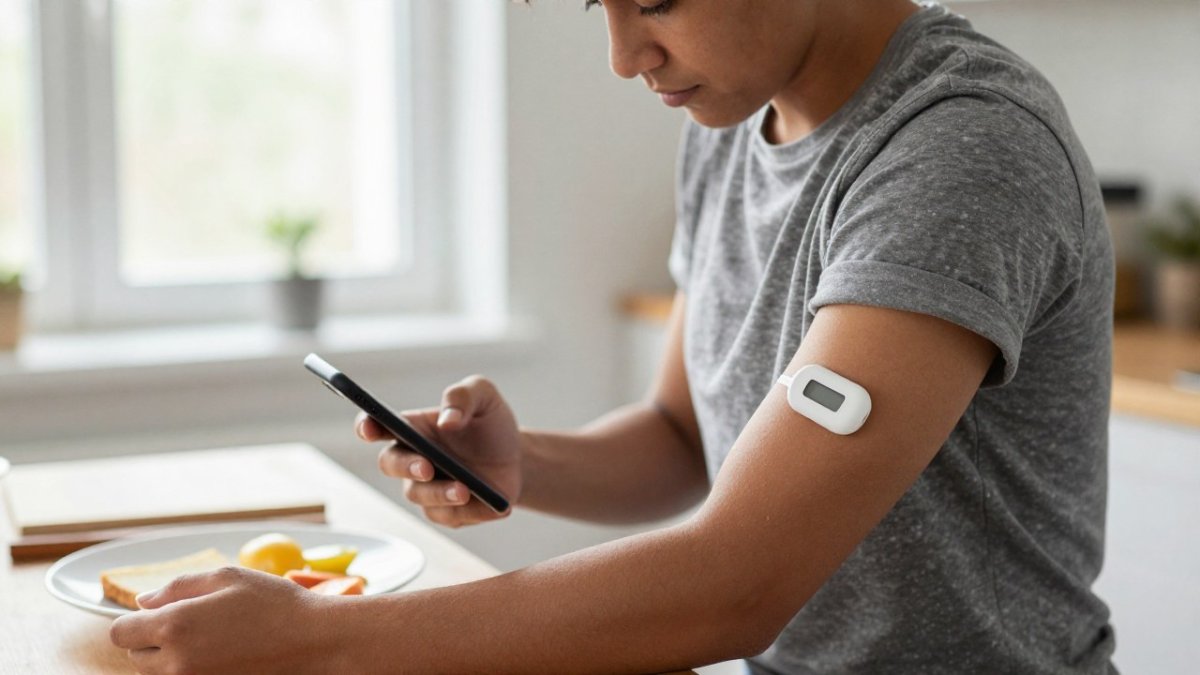
Look for three things: time in range, how quickly your glucose rises after meals, and whether overnight readings are steady. Bring these observations to your clinician rather than adjusting medication on your own.
Watch out: reacting to every spike can lead to constant worry without better outcomes. Focus on patterns that repeat across a week.
Diabetes Health Metrics Beyond Blood Sugar: Sleep, Stress and Movement
Blood sugar does not change in isolation. Poor sleep and high stress can both push glucose in the wrong direction, and a daily walk can help it recover. Tracking these alongside glucose lets you see connections that a glucose log alone would miss.
Start with one extra metric. Sleep duration is often the easiest to record consistently. After two or more weeks, compare nights with shorter sleep to next-day readings. If you want a structured method, a guide on correlating sleep and stress with your data can walk you through the steps. You can also see how this fits into the broader picture in our complete guide to managing GLP-1 wellness and nutrition.
Comparing Diabetes Wellness Apps and Wearables
Many people already own a watch, a ring, or a phone app that records activity and sleep. The question is whether those tools help you act on the data.
Many wearables are strong at collecting numbers but can be weaker at explaining them. The gap is often interpretation, and this is where a coaching layer can add value. Our approach at eeMeds is to connect the devices you already use rather than replace them. Devices such as wearables and rings each tend to focus on their own hardware ecosystem, so the right choice depends on whether you want a device, an app, or a connected view across both.
Safety, Privacy and Clinician Oversight
Before sharing health data with any platform, check how it stores information, who can access it, and whether you can delete it. For practical steps on keeping your records protected, how to keep your health data secure covers the essentials. Read the privacy policy, and use strong passwords with two-factor authentication where offered. Ask whether the platform shares data with third parties and how long it retains your records after you stop using the service. These questions matter because diabetes data can reveal a great deal about your daily life, and once shared it can be difficult to withdraw.
Safety also depends on knowing when to stop relying on software. An AI coach can help you notice patterns, but it cannot diagnose a problem, adjust medication, or respond to an emergency. Contact your clinician promptly if you notice symptoms such as severe lows, persistent highs, confusion, or signs of infection. Treat urgent glucose events as you would without any app: follow your care plan, use fast-acting glucose for lows if prescribed, and seek emergency care for symptoms that do not improve. AI coaching is not an emergency service and should never delay you from getting real-time help.
Clinician oversight is the third pillar. Keep your care team involved in any change to diet, activity, or medication. A useful habit is to bring your AI-generated observations to appointments rather than acting on them alone. Ask your clinician which patterns are worth watching and which can be safely ignored, so you are not reacting to every spike. If you use a continuous glucose monitor, confirm with your clinician how to interpret time in range and when a trend warrants a call.
A final practical step is to check whether the platform integrates with your existing devices and care team. Ask whether it can import data from your glucose meter or continuous glucose monitor, whether it connects to your electronic health record, and whether your clinician can review your data directly. Integration reduces the burden of manual logging and helps ensure that the information you and your coach discuss is the same information your clinician sees.
Choosing Your Next Step With a Diabetes Coaching Program
Start small. Pick one metric to track for two weeks, one habit to test, and one question to bring to your next appointment. That approach gives you usable information without a steep learning curve.
If you want to see how an AI-supported approach fits your routine, you can explore eeMeds to see how the platform connects your data. If you would rather talk to someone first, our licensed telehealth option through eeTeleHealth Plus is available for virtual consultations. Either way, the goal is the same: clearer information, better conversations with your care team, and steady progress you can sustain.
BUTTON: See how eeMeds works CARD_TITLE: Ready to connect your health data? CARD_TEXT: eeMeds links your wearables, labs and daily notes into one clear view of your wellness.
Frequently Asked Questions
Is there an AI health coach for diabetes?
Yes. Several AI-supported coaching tools now combine data from glucose monitors, wearables, and logs to suggest habit changes for people with diabetes. They work best as a support layer alongside your care team, not a replacement for it. Look for a platform that explains its suggestions in plain language, lets you share data with your clinician, and states clearly when a question should go to a qualified professional. Check how each product handles privacy and whether it is designed for your type of diabetes.
Can AI coaching replace a diabetes care team?
No. AI coaching can help you notice patterns, such as blood sugar rising after poor sleep or high-stress days, and prompt you to act on them. Decisions about medication, dosing, and treatment changes still belong with your doctor, diabetes educator, or other licensed clinician. Use AI coaching to prepare better questions and bring organized data to appointments, and keep your care team informed about any changes you make.
What diabetes data can an AI health coach help interpret?
Many tools can read glucose trends from continuous glucose monitors, along with sleep duration, activity, stress or mood entries, meal logs, and weight. The most useful insights come from connecting these inputs, for example seeing how a late night or a stressful week lines up with higher readings. Interpretation is only as reliable as the data entered, so consistent logging and device syncing matter. Treat any suggested change as a question to discuss with your clinician.
What should I look for in an AI diabetes coaching program?
Look for clear explanations of how the tool reaches its suggestions, a defined pathway to human support, and transparent privacy and consent controls. Check whether it works with the devices and apps you already use, and whether you can export or share your data with your care team. Be cautious of anything that promises to replace medication or guarantees specific outcomes. Ask your clinician whether a particular program fits your type of diabetes and your current treatment.