 How-to
What Is Contextual Wellness Data and Why Does It Matter?
Last Updated: November 18, 2026
Quick Summary
Contextual wellness data is health information paired with the circumstances that explain it, combining what your body did with when, where, and how you were living at the time. It connects wearable signals, manual logs, and clinical data so patterns emerge that you can actually act on.
- Three ingredients make contextual wellness data useful: the signal, the circumstances, and the interpretation over time.
- Personal context includes sleep timing, meals, caffeine, mood entries, and medication schedules.
- Situational context is time-bound, so it is the layer most likely lost in monthly averages.
- The strongest setup connects wearables, manual logs, and clinical data like labs and medication history.
- Good personalized recommendations are specific, small, and grounded in your own data rather than trends.
Table of Contents
- Why Your Wearable Numbers Need Context
- What Contextual Wellness Data Actually Means
- Contextual Data Examples You Already Generate Every Day
- How Wearable Health Data Fits the Bigger Picture
- What a Good Wellness Tracking App Should Do With Context
- Manual Tracking vs. Wearables: Where Each One Wins
- Privacy, Consent and Keeping Your Data Yours
- Frequently Asked Questions
Why Your Wearable Numbers Need Context
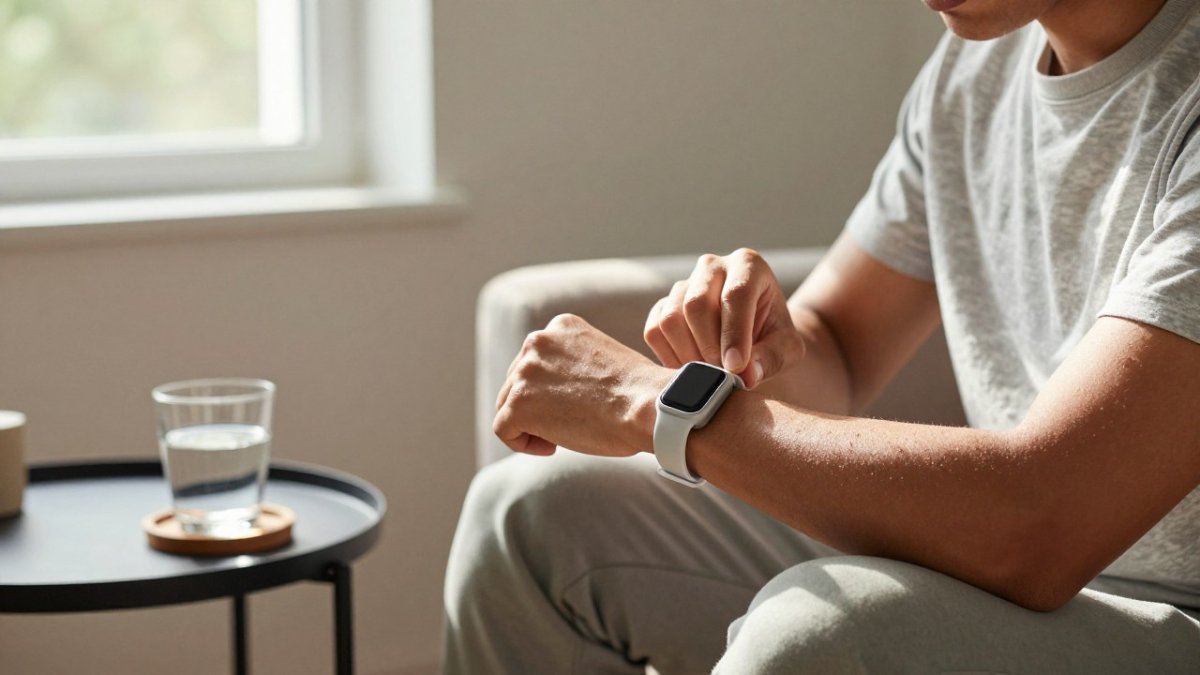
Your smartwatch says you slept badly. It doesn't know why. For a deeper explanation, read why wearable data needs context to be useful.
At eeMeds, we build around this exact problem. A wearable sees your body, a journal captures your feelings, and a lab portal holds your results.
The common mistake is treating a single metric as a verdict. It isn't. It's one sentence in a much longer paragraph.
What Contextual Wellness Data Actually Means
Contextual wellness data is health information paired with the circumstances that explain it.
A heart-rate reading alone tells you a number. Add the context of a stressful work week, a late meal, and a skipped walk, and the reading starts to mean something.
Three ingredients make contextual wellness data useful:
- The signal: sleep, stress, mood, movement, vital signs
- The circumstances: schedule, location, workload, relationships, routine
- The interpretation: how the two interact over time
Strip away the circumstances and you're left with a pile of numbers. Keep them, and patterns emerge that you can work with.
Contextual Data Examples You Already Generate Every Day
Most people assume contextual data requires special equipment. It doesn't. You produce it constantly, and much of it never reaches an app. The problem is that "context" gets used as a catch-all, so people either collect everything or nothing. A simple four-layer taxonomy fixes that.
Layer 1: Personal Context
Personal context is who you are and how your body and habits behave over time. It includes:
- Sleep timing and consistency, not just total hours
- Physical activity type, duration, and time of day
- Meals and caffeine, especially late in the day
- Mood entries and stress check-ins
- Medication schedules, including GLP-1 routines
These are the variables that explain why two identical sleep scores can feel completely different. They are also the ones most likely to be missing from a wearable export, which is why manual wellness tracking still matters.
Layer 2: Situational Context
Situational context is what is happening around you right now. It includes:
- Workload spikes and deadline weeks
- Seasonal light changes and weather
- Home environment and noise
- Social support and caregiving duties
- Access to safe spaces for movement
- Acute events like illness, injury, or a disrupted routine
A stressful commute and a quiet home office produce different stress readings on the same body. Situational context is time-bound, so it is the layer most likely to be lost if you only look at monthly averages.
Layer 3: Geographic Context
Geographic context is where you live and move. It includes:
- Neighborhood walkability and access to green space
- Local climate and daylight patterns
- Proximity to grocery stores and healthcare
- Commute patterns and time spent in traffic
Two people with the same step count can have very different movement opportunities depending on where they live. Geographic context helps separate personal choice from environmental constraint.
Layer 4: Policy and System Context
Policy context is the rules and systems around you. It includes:
- Workplace wellness policies and shift schedules
- Insurance coverage for preventive services
- Local public health guidance
- School and childcare calendars that shape family routines
This layer is easy to ignore because it rarely shows up in a wearable app, but it often explains why a recommendation that works for one person fails for another.
How to Use the Taxonomy
You do not need all four layers for every question. Start with the outcome you care about, then ask which layers could plausibly explain it. For sleep, personal and situational context usually carry the most weight. For movement, geographic context often matters more than people expect. For stress, situational and policy context frequently dominate.
Watch out: treating every data point as equally important is the fastest way to build a noisy record that no one trusts. Pick the layers that fit your question and leave the rest out until you need them.
How Wearable Health Data Fits the Bigger Picture
Wearable health data is powerful, but it's only one input. Devices capture sleep stages, heart rate variability, steps, and recovery trends with impressive precision.
Consider a rising resting heart rate over two weeks. A wearable flags it. Context explains it: a new medication, a stressful project, or a mild illness.
The strongest setup connects three streams:
- Wearables and mobile sensors for objective signals
- Manual logs for mood, stress, and subjective experience
- Clinical data like lab results and medication history
For a deeper look at connecting these sources, see our guide on how to integrate wearable health data.
What a Good Wellness Tracking App Should Do With Context
A wellness tracking app should explain your numbers, not just display them.
Look for these capabilities when you evaluate any platform:
- Device neutrality: works with the wearables you already own
- Multidimensional records: sleep, mood, movement, labs, and meds in one place
- Pattern detection: highlights links between behavior and outcomes
- Plain-language explanations: tells you what a change likely means
- Human guidance: a path to a real professional when needed
If you're comparing features, our breakdown of wellness app features that turn data into action walks through what separates useful tools from noisy dashboards.
(https://eemeds.com/features) to see how personalized recommendations work in practice.Manual Tracking vs. Wearables: Where Each One Wins
Neither manual tracking nor wearables wins outright. Each one is better at different jobs, and the strongest approach uses both.
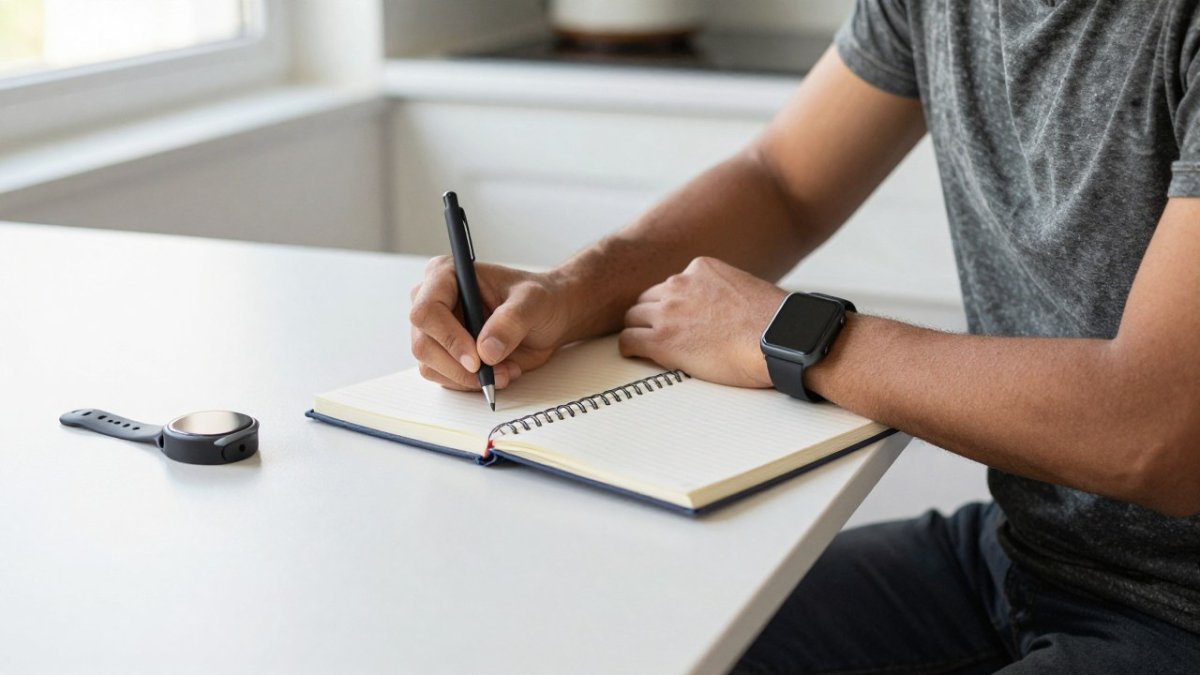
Wearables excel at objective, continuous signals, capturing data automatically without manual entry. Manual tracking excels at the things a sensor can't feel: mood, stress, energy, and the reason behind a change.
| Method | Best For | Weakness | Use When |
|---|---|---|---|
| Wearables | Sleep stages, heart rate, steps | Misses feelings and reasons | Tracking body signals automatically |
| Manual logs | Mood, stress, energy, context | Easy to skip or forget | Capturing the "why" behind a shift |
| Combined | Full picture of body and mind | Needs a connecting system | You want patterns, not just numbers |
A common mistake is choosing one and abandoning the other. The real insight lives where they meet.
Privacy, Consent and Keeping Your Data Yours
Health data is personal, and it deserves careful handling. Before syncing anything to a new platform, ask three questions: What is collected, who can see it, and how is it protected? Those questions are the start of a workflow, not the end of one.
A Practical End-to-End Workflow
Building a contextual wellness dataset that you can actually trust follows a repeatable sequence:
- Define the use case. Decide what decision the data should support, such as understanding why sleep dips on workdays. A clear use case tells you which layers of context to collect and which to skip.
- Map your sources. List wearables, manual logs, lab portals, and calendar or location inputs. Note what each source captures and what it misses.
- Collect with minimization in mind. Collect only the variables the use case requires. If a location feed is not needed to answer the question, do not connect it.
- Align time and identity. Match records to the same person and the same time window. A sleep reading from Tuesday night should not be compared with a mood log from Thursday morning.
- Document provenance. Record where each data point came from, when it was captured, and how it was transformed. Provenance is what lets you trust a pattern later.
- Check quality and bias. Look for missing days, device gaps, and whether your data represents your actual routine rather than a unusual week.
- Evaluate before you recommend. Test whether a suggested change is relevant, safe, and followed. A recommendation that is ignored is not a success.
- Review and retire. Revisit consent and data retention on a schedule, and delete what no longer serves the use case.
Data Quality and Bias Checks
A contextual dataset is only as good as its weakest layer. Before drawing conclusions, run a short checklist:
- Coverage: Are there gaps on weekends, travel days, or sick days that would distort the pattern?
- Measurement error: Do two devices agree on the same night's sleep, or are you comparing apples to oranges?
- Representativeness: Does your data reflect your normal life, or an unusually stressful month?
- Missingness: Is a missing mood entry a sign of a bad day or simply a forgotten log?
Missing entries are often not random, since people tend to skip logs when they are busiest, which is when context may matter most.
Interoperability Basics
When you combine sources, a few technical habits prevent most headaches:
- Use a consistent identifier for each person and each device.
- Store timestamps in a single time zone and note any changes.
- Keep raw data alongside processed data so you can re-run an analysis.
- Document how geospatial joins and time alignments were performed.
These habits are not glamorous, but they are what separate a dataset you can reason about from a pile of exports.
Consent and Control
A trustworthy wellness platform should offer:
- Clear consent: you choose what to share and can change your mind
- Data minimization: only what is needed for the insight
- Transparency: plain-language privacy terms
- Secure storage: encryption and access controls
- Control: the ability to export or delete your data
For practical steps on protecting your information, read our guide on how to keep your health data secure.
Watch out: consent collected once at sign-up is not enough. Context changes, devices change, and people forget what they agreed to, so consent needs a visible, revisitable home in any platform you use.
Frequently Asked Questions
Can you give me an example of contextual data in wellness tracking?
As an illustration, a wearable might show a resting heart rate above your usual baseline. On its own, that number is just a flag. Adding context, such as a late meal, a stressful deadline, or a warm bedroom, can help show what may have changed. Contextual wellness data combines the reading with those surrounding details so you can see which factor likely drove the change and what to adjust first.
What kinds of information can add context to sleep or activity data?
Useful context includes bedtime and wake time consistency, caffeine and alcohol timing, room temperature, travel or shift work, stress levels, mood notes, menstrual cycle phase, medication changes, and whether you exercised late. Even a one-line journal entry about a difficult day counts. The goal is not to log everything, but to capture the handful of variables that repeatedly explain your off nights or low-energy days.
How can manual wellness tracking complement wearable data?
Wearables measure what happens on the body's surface: steps, heart rate variability, sleep stages. They cannot measure why. A short manual log of mood, stress, food timing, and energy gives the missing why. A short daily log can be enough to start. Over a few weeks, patterns may emerge that neither source shows alone.
How can a coach use contextual wellness data to personalize guidance?
A human coach can look at your wearable trends alongside your own notes and ask questions: did the poor sleep follow the late workout or the argument? They can then suggest one change at a time and check whether the data moves. That human loop matters because context is often emotional and situational, and no app reliably interprets a difficult week. Coaching turns a data set into a conversation about what is realistic for you.