 How-to
Wearable Data Insights: Turning Biometrics Into Better Health
Last Updated: November 12, 2026
Quick Summary
Wearable data insights turn raw biometrics into better health by focusing on trends in heart rate variability, resting heart rate, movement and sleep rather than single readings. Pair your wearable data with manual notes on mood and context, and review it with a human coach or clinician to turn numbers into a plan.
- Three signals do most of the useful work: heart rate variability, resting heart rate, and movement.
- Read sleep tracking insights as a weekly pattern, not a nightly score.
- A ten-minute weekly review of trends, not daily views, can prevent anxiety.
- Consumer wearables are better suited to spotting trends than confirming medical conditions.
- Pair your data with a human conversation at least once a month.
Table of Contents
- Why Raw Wearable Data Insights Rarely Change Anything
- The Wearable Health Metrics That Actually Matter Day to Day
- Sleep Tracking Insights: Reading the Night Without Overreacting
- Fitness Tracker Data Analysis: From Numbers to Patterns
- Where Wearables Get It Wrong: Accuracy, Bias and Data Ownership
- Health Coaching With Wearable Data: The Human Layer
- Manual Wellness Tracking: The Data Your Device Misses
- Bringing Your Wearable Data to a Virtual Care Conversation
- Frequently Asked Questions
Why Raw Wearable Data Insights Rarely Change Anything
Most people who wear a tracker are swimming in numbers and starving for meaning. Your ring logs a rough night, your watch flags a stress spike, your phone stacks another app on top. None of it tells you what to do next. For a deeper look, read why wearable data needs context to be useful.
At eeMeds, we built our platform around that exact gap. A number without context is noise. A pattern with a human explanation is a decision.
Here is the core problem. A wearable measures a signal. It does not measure your deadline, your late meal, your argument with a friend, or the cold you fought off last week.
So before you trust any readout, ask what it is missing. Below, we walk through the metrics that matter, how to read them without panicking, and where the human layer still does the heavy lifting.
The Wearable Health Metrics That Actually Matter Day to Day
Three signals do most of the useful work: heart rate variability, resting heart rate, and movement. Everything else is supporting cast. These wearable health metrics are the ones worth watching week to week.
Heart Rate Variability and Resting Heart Rate
Heart rate variability (HRV) is the small variation in time between heartbeats. A higher, steadier HRV usually points to a body that is recovering well. A dip can flag fatigue, illness, or stress.
Resting heart rate works the same way. A resting rate that creeps up over several days often signals that something is off, even before you feel it.
Two rules keep this useful:
- Compare trends, never single readings
- Look at a rolling week, not one bad night
A common mistake is treating one low HRV morning as a verdict. It is a hint, not a diagnosis.
Activity Levels, Movement and Recovery
Steps get all the attention, but recovery is where the story lives. Movement and rest are two sides of the same coin.
- Activity levels show how much you moved, not how well you recovered
- Recovery shows whether your body absorbed that load
- A rest day after a hard week is data, not laziness
Watch out: chasing a step streak while ignoring a rising resting heart rate is how people train themselves into a hole. The device rewards movement; your body pays the bill.
Three signals do most of the useful work, and each one is best read as a trend rather than a single reading.
| Metric | What it shows | How to read it |
|---|---|---|
| Heart rate variability | Whether the body is recovering well | Compare trends, never single readings |
| Resting heart rate | A creeping rise can signal something is off | Look at a rolling week, not one bad night |
| Activity levels | How much you moved, not how well you recovered | Don't chase a step streak while resting heart rate rises |
| Recovery | Whether your body absorbed the load | A rest day after a hard week is data, not laziness |
Sleep Tracking Insights: Reading the Night Without Overreacting
Sleep tracking insights are most useful as a weekly pattern, not a nightly score. One rough night means little. Three rough nights in a row is a signal worth acting on.
Your tracker estimates sleep stages, time awake, and consistency. The consistency piece is the one people skip. A steady bedtime often does more for how you feel than squeezing in extra minutes.
Here is how we would read a week of sleep data:
- Note your average sleep time across seven nights
- Circle any night that broke your usual bedtime by more than an hour
- Check whether those nights line up with stress, late meals, or alcohol
- Change one variable the following week and compare
If sleep is your main focus, our guide on optimizing sleep recovery with data walks through a fuller routine for turning nightly readings into a calmer plan.
The trap is overreacting. A single red score can send people into a spiral of worry that makes the next night worse. Read the trend, not the alarm.
Fitness Tracker Data Analysis: From Numbers to Patterns
Fitness tracker data analysis turns a pile of readings into a few patterns you can act on. The goal is not more data. It is fewer, better questions, and a calmer mind.
Many apps show you a number and leave the "why" to you. Our wellness app features guide explores how to move from readings to a next step. But there's another gap: data literacy.
Start with three questions that keep you grounded:
- Which days do I feel best, and what did I do the day before?
- When does my stress climb, and what tends to precede it?
- Which weeks do I sleep well, and what was different?
These questions shift your focus from single readings to patterns. A single high heart rate reading during a workout is normal; a resting heart rate that's been creeping up for a week is a pattern worth noting.
A simple weekly review takes ten minutes and can prevent anxiety:
- Open your trend view, not your daily view. Daily views are noisy; trends smooth out the noise.
- Write down one pattern you noticed, positive or negative. For example, "My sleep was more consistent on days I walked before noon."
- Pick one small change for the coming week. Keep it specific and achievable.
- Compare at the end of the week. Did the change make a difference? If not, adjust.
This practice builds data literacy. Over time, you learn which signals are meaningful for you and which are just noise.
Many people find that reviewing their data weekly, rather than hourly, reduces worry and makes patterns easier to see.
Watch out: if you find yourself checking your stats compulsively or feeling anxious about a single bad reading, step back. Data should inform you, not rule you.
Where Wearables Get It Wrong: Accuracy, Bias and Data Ownership
Consumer devices are good at trends and shaky at absolutes. That is the honest summary of accuracy in this space. But the reasons behind that shakiness matter if you want to trust your data wisely.
Consumer-grade vs. clinical-grade accuracy is the first divide. A wrist-based optical heart rate sensor, for example, uses green LEDs to detect blood volume changes.
Algorithmic bias is a quieter issue. Many wearables are calibrated on datasets that skew young, white, and physically active.
Data privacy and security deserve more than a passing nod. Your health data is among the most sensitive information you generate.
Data ownership is the practical side of privacy. When your history is split across five apps, no single tool sees the whole picture. That fragmentation is a design flaw, not your fault.
Watch out: any app that asks for broad health permissions without a clear explanation of how it stores and shares your data deserves a hard second look.
Health Coaching With Wearable Data: The Human Layer
Health coaching with wearable data works because a person can ask the question a device cannot: "What was happening in your life that week?" That context turns a number into a plan.
A coach might ask about your workload or your week when a sleep dip or stress spike appears. The device supplies the signal; the human supplies context.
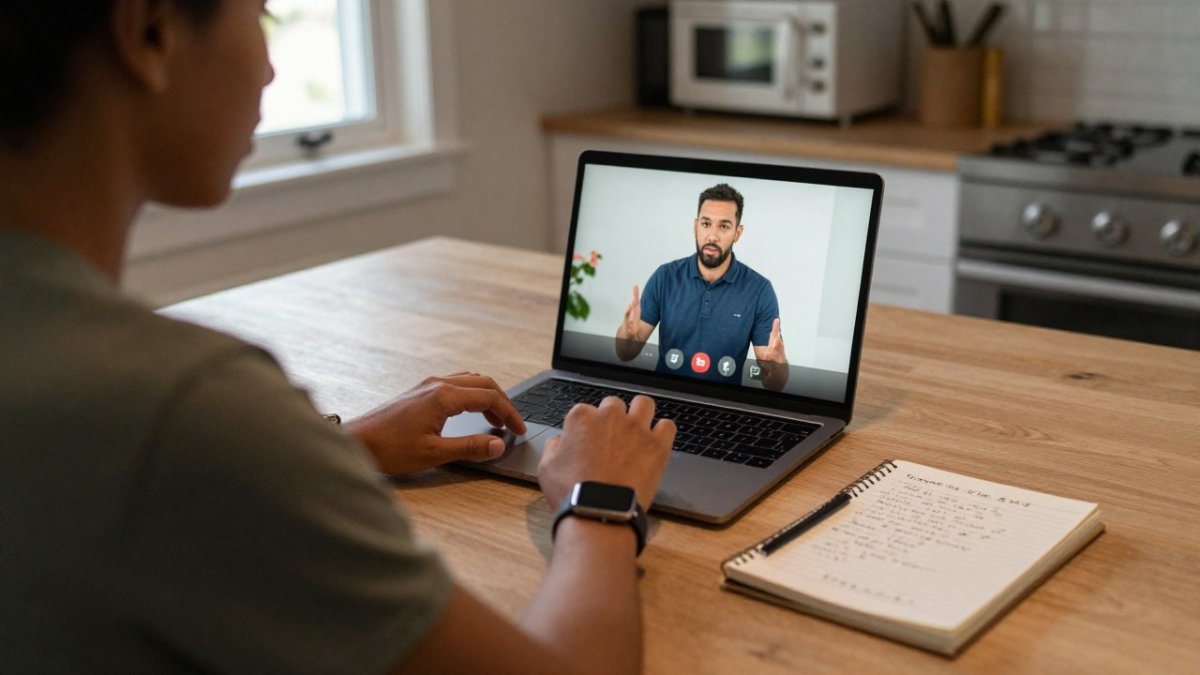
Many wellness apps offer a dashboard without much guidance on what to do next. If you want the deeper case for why context matters, our article on whether biometric data can personalize wellness digs into it.
The practical takeaway: pair your data with a human conversation at least once a month. That single habit does more than any new sensor.
Manual Wellness Tracking: The Data Your Device Misses
Your device sees your body. It does not see your mood, your energy, or the reason you skipped a workout. Manual wellness tracking fills that gap.
A short daily log takes under a minute:
- Rate your mood from one to five
- Note your energy level
- Jot one word on stress
- Mark any missed routine and why
Over a few weeks, these notes can add context to the dips your tracker flagged. A stress spike lines up with a hard meeting. A sleep dip may follow a late meal. The device saw the effect; your notes may help reveal the context.
Manual notes can add context that a device cannot capture. Numbers show what happened; notes can help explain why.
Bringing Your Wearable Data to a Virtual Care Conversation
Wearable data becomes far more useful when a clinician can see it. A trend view beats a vague memory in any care conversation.
Before a virtual visit, gather:
- A week or two of sleep and resting heart rate trends
- Any stress or mood notes that stand out
- A short list of what changed and when
This is where eeMeds connects the dots. The eeMeds™ platform brings together wearable data, labs, mood, sleep, stress, and medication experience to reveal how they interact. Behavioral Driver Analysis™ adds personal context behind the patterns, and eeTeleHealth Plus™ connects you with licensed professionals for virtual consultations when you want one.
If you are ready to act on what your data is telling you, you can explore E&E Medicals virtual care and see how the pieces fit together.
The point is not more tracking. It is a clearer picture of the whole person, so the next conversation starts from understanding rather than guesswork.
Your wearable already sees your body.
Frequently Asked Questions
What are wearable data insights, and how are they different from the numbers on my watch?
Wearable data insights are the patterns and explanations behind the raw numbers. Your watch shows a resting heart rate of 62 or a sleep score of 71; an insight tells you that your resting heart rate climbs on weeks when you sleep under six hours, or that your recovery dips after late meals. The value comes from connecting signals across time and across sources, including your own notes on mood, stress and energy, so you can act on something specific rather than stare at a dashboard.
Which wearable health metrics are most useful for everyday wellness?
Start with four: resting heart rate, heart rate variability, sleep duration and daily movement. These respond quickly to stress, alcohol, illness and training load, so they give you fast feedback. Blood oxygen and skin temperature trends are useful supporting signals, especially when you feel off but cannot say why. Glucose monitoring matters for metabolic health journeys, but it needs clinical context. Pick two or three metrics, watch them for a month, and ignore the rest until you have a baseline.
Can wearable devices accurately track sleep and stress?
Consumer wearables are reasonable at estimating sleep duration and decent at spotting broad trends, but they are weaker at classifying sleep stages and at measuring stress directly. Most stress scores are inferred from heart rate variability and movement rather than measured. Treat sleep tracking insights as directional: useful for spotting that late screens push your bedtime later, less useful as a diagnosis. If sleep problems persist for weeks, that is a conversation for a clinician, not an app.
How do I turn fitness tracker data analysis into habits that stick?
Choose one lever and one metric. For example, set a fixed wind-down time and watch whether your sleep duration and morning heart rate variability move over three weeks. Keep a short manual log of mood, caffeine and stress so you can see what the device cannot. Review weekly, not hourly. When a change holds for a month, add the next lever. This is also where health coaching with wearable data helps: a person can spot the pattern you have stopped seeing and suggest a practical next step.