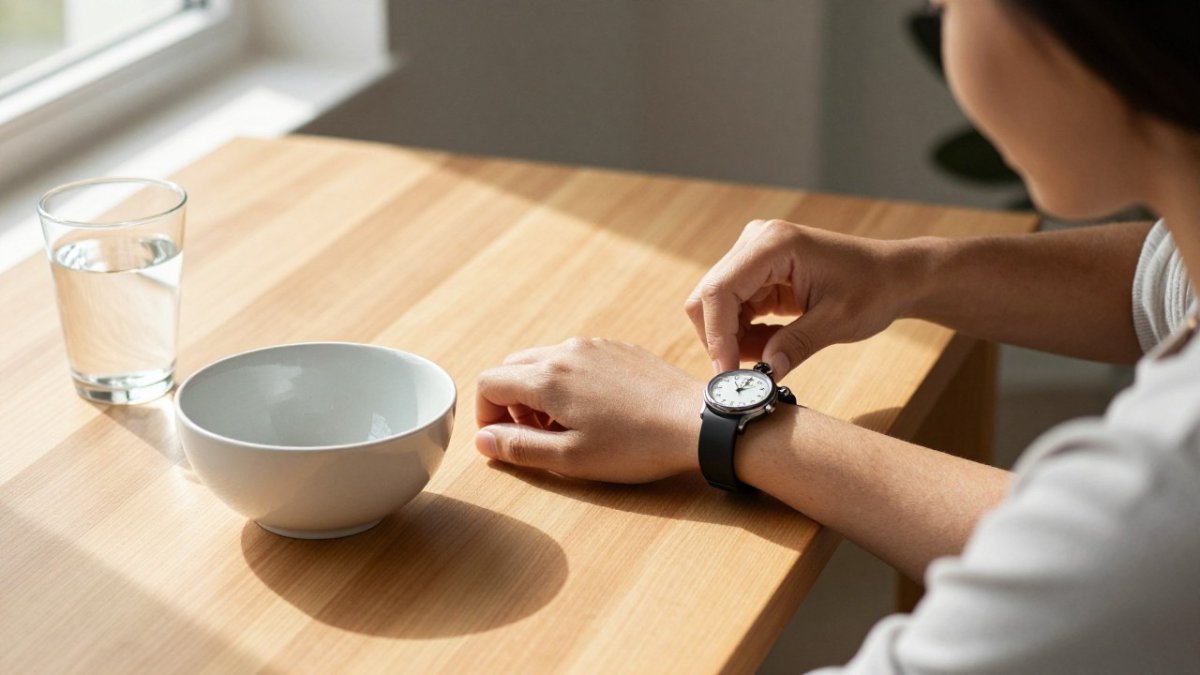
 Ultimate guide
Wearable Health Scores: What They Measure and How to Read Them
Last Updated: November 16, 2026
Quick Summary
Wearable health scores are single numbers that summarize several physiological signals, typically activity, sleep, and body data such as resting heart rate, into one reading you can act on. Because each brand weights and normalizes these signals differently, you should read scores against your own baseline rather than as an absolute verdict.
- A composite score is a weighted blend of activity, sleep, and body signals normalized against your history or a population reference.
- A readiness score typically draws on HRV, resting heart rate, sleep quality, and recent training load or strain.
- One low readiness day is noise; four low days is a trend worth discussing with a clinician.
- Build one baseline per device by wearing it consistently for at least three to four weeks.
- Manual tracking captures context no sensor sees, such as workload, alcohol, travel, illness, or conflict.
Table of Contents
- What Wearable Health Scores Actually Measure
- How Composite Scores Combine Activity, Sleep, and Body Data
- Wearable Sleep Score: Reading Sleep Quality, Not Just Hours
- Wearable Readiness Score: Recovery, Strain, and What Your Body Is Telling You
- Wearable Health Score Accuracy: What the Sensors Can and Cannot Tell You
- Manual Wellness Tracking: Where Your Own Notes Beat the Algorithm
- Comparing Scores Across Devices and Building a Personal Baseline
- Turning Your Scores Into a Conversation With a Clinician
- Frequently Asked Questions
What Wearable Health Scores Actually Measure
Wearable health scores are single numbers that summarize several physiological signals into one reading you can act on. Most devices build that number from three inputs: activity data, sleep data, and body data such as resting heart rate. At eeMeds, we see these scores as a useful starting point, not a verdict.
The appeal is obvious. One glance can suggest whether to push harder or back off. The risk is equally obvious: a number that compresses dozens of measurements hides the reasoning behind it.
The Signals Behind the Numbers
Underneath every composite score sits a small set of raw signals. Most consumer-grade wearables track some combination of:
- Heart rate and resting heart rate
- Heart-rate variability, or HRV
- Respiratory rate during sleep
- Movement and step counts
- Skin temperature changes overnight
- Time spent in sleep stages
Each signal is noisy on its own. A single night of poor sleep, a late meal, or a stressful meeting can shift your heart rate enough to move the score. That is why the better devices lean on trends rather than single readings.
How Composite Scores Combine Activity, Sleep, and Body Data
A composite health score is a weighted blend of your activity, sleep, and body signals, normalized against either your own history or a population reference. The weighting is proprietary, and that is the first thing to understand: no two brands calculate it the same way.
In practice, the algorithm does four things in sequence.
First, it cleans the raw sensor data, removing obvious artifacts like a loose strap, a walk with swinging arms, or a night when the watch slipped off. Second, it converts each raw signal into a normalized value, usually on a 0 to 100 scale, so that a heart-rate reading in beats per minute and a sleep duration in minutes can be compared on the same footing. Third, it weights each normalized signal according to how much the brand believes it predicts readiness or health. Fourth, it combines the weighted values and maps the result onto an interpretive zone such as "strained," "balanced," or "primed."
The weighting step is where devices diverge most. A readiness-focused score may weight some signals, such as overnight HRV, more heavily than others, while a general wellness score may weight activity and sleep more heavily.
A worked example makes this concrete. Suppose your baseline overnight HRV is 55 ms and last night it was 48 ms, a meaningful drop. Your resting heart rate is 2 beats above baseline, your sleep score is 78 out of 100, and your recent training load is moderate.
What most guides miss is how much the reference group matters. A score of 70 measured against your own 90-day baseline means something very different from a 70 measured against everyone in your age bracket. A personal baseline captures your normal; a population reference captures how you compare to others.
Watch out: treating two scores from two apps as if they measure the same thing. They may share inputs but weight them differently, normalize against different references, and use different zone labels. The only fair comparison is each score against its own baseline over time.
Wearable Sleep Score: Reading Sleep Quality, Not Just Hours
A wearable sleep score estimates sleep quality by combining duration, time spent in sleep stages, and signs of physiological disturbance overnight. Eight hours in bed with frequent wakeups can score lower than seven hours of uninterrupted sleep.
That distinction matters because most people fixate on total hours. The score is trying to tell you something more useful: how restorative the night actually was. Look at the components, not just the headline number. If your duration is fine but your sleep score drops, the likely culprits are late screen time, alcohol, a warm bedroom, or stress carried into the evening. For actionable guidance, see how to optimize sleep recovery with data.
Wearable Readiness Score: Recovery, Strain, and What Your Body Is Telling You
A readiness score, sometimes called a recovery score, estimates how prepared your body is for physical or mental load today. It typically draws on HRV, resting heart rate, sleep quality, and recent training load or strain.
Here is where the score earns its keep. When your readiness score trends down for several days while your training load climbs, that is a genuine signal to ease off. When it dips for one day after a hard session, that is normal physiology, not a warning.
The mistake is treating a low readiness score as an instruction to do nothing. A better response is to adjust intensity, protect sleep that night, and watch whether the pattern persists. One low day is noise. Four low days is a trend worth discussing with a clinician.
Wearable Health Score Accuracy: What the Sensors Can and Cannot Tell You
Wearable health score accuracy is best understood as two separate questions: how well the sensor measures a signal, and how well the algorithm interprets that signal into a score. Consumer-grade sensors have improved considerably at the first and remain uneven at the second.
What the sensors do well: continuous heart rate during rest and steady movement, step counts, and overnight respiratory patterns.
Validation is the word you will see attached to these claims, and it is worth knowing what it means in plain language.
The first is which outcome was tested. A study showing that a device counts steps accurately says little about whether its sleep score is meaningful. The second is the population studied.
NIH research on consumer wearable validation has repeatedly highlighted that validation studies vary widely in methodology, which makes cross-brand comparisons difficult.
For a consumer, the practical takeaway is to ask three questions of any accuracy claim: What was measured? Against what reference? In whom? A claim that answers all three is more trustworthy than a marketing line that answers none.
Watch out: treating a wearable score as a diagnostic result. These devices monitor and estimate; they do not diagnose. For a fuller look at where the limits sit, read our guide on what wearable limitations mean for your health data.
Manual Wellness Tracking: Where Your Own Notes Beat the Algorithm
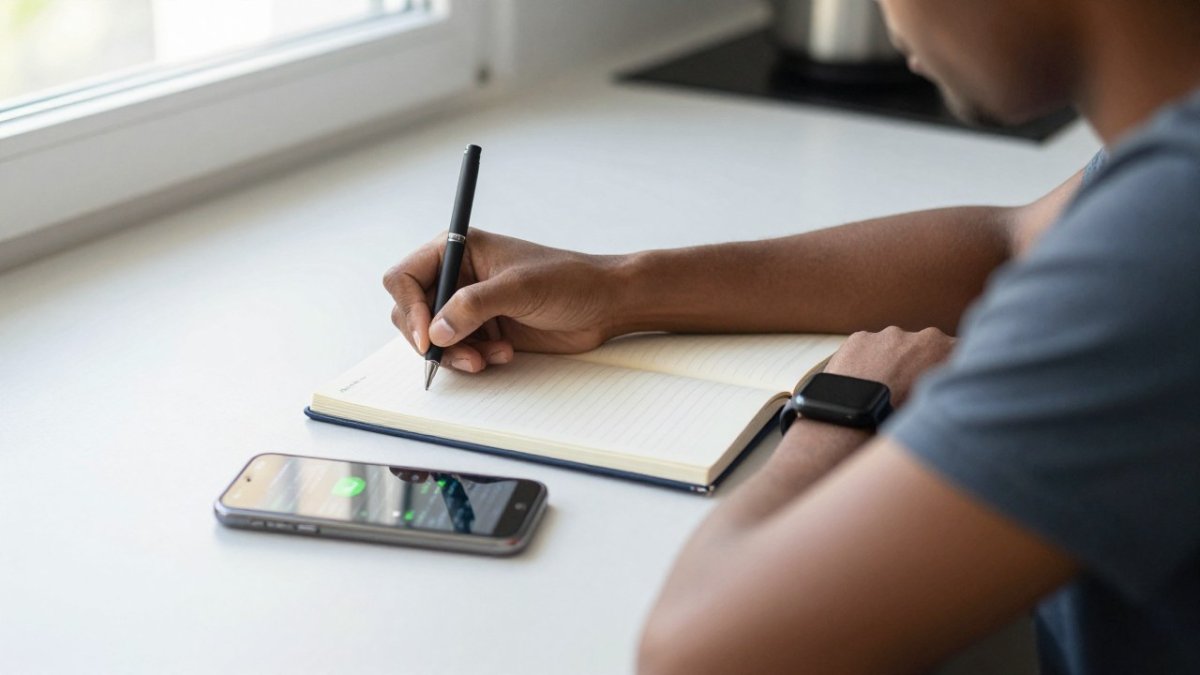
Manual wellness tracking is the practice of recording how you feel, what you did, and what changed, in your own words. It captures the context no sensor can see: that your sleep score fell the week your workload doubled, or that your stress rose after a specific conversation.
A common mistake is treating the app as the whole record. The algorithm sees your body. It does not see your feelings, your deadlines, or the argument you had at dinner. Those are usually the actual drivers.
A simple routine works better than an elaborate system:
- One line each morning on how rested you feel, rated 1 to 5
- One line each evening on mood and energy
- A short note on anything unusual: alcohol, travel, illness, conflict
- A weekly review comparing your notes to your score trends
Ten minutes a week is enough. The point is to give the numbers a story.
Comparing Scores Across Devices and Building a Personal Baseline
Cross-device consistency is where most people get tripped up. A readiness score of 65 on one platform and 80 on another is not a contradiction; the two are measuring related things with different formulas and different baselines. Comparing them directly tells you nothing.
Build one baseline per device. Wear the same device consistently for at least three to four weeks, note your typical range, and treat movement outside that range as meaningful. If you switch devices, start the baseline over.
Fitbit and Apple Health comparison guidance can help you understand how platform differences shape the numbers, and our own breakdown of Fitbit versus Apple Health tracking covers accuracy and features in more detail.
| Score Type | Main Inputs | Best Used For | Main Limitation |
|---|---|---|---|
| Sleep score | Duration, stages, overnight disturbance | Spotting nights that were not restorative | Weak sleep-stage detection |
| Readiness score | HRV, resting heart rate, sleep, load | Deciding whether to push or ease off | Sensitive to one bad night |
| Activity score | Movement, steps, intensity | Tracking consistency over weeks | Ignores non-step exertion |
| Composite score | All of the above, weighted | A daily at-a-glance summary | Hides the reasoning behind it |
For a deeper walkthrough of reading individual metrics, see our guide to interpreting your wearable health metrics.
Turning Your Scores Into a Conversation With a Clinician
A score becomes genuinely useful when it starts a conversation rather than ending one. Bring your trend data, not a single reading. A clinician can look at a two-week pattern of falling readiness, rising resting heart rate, and disrupted sleep and connect it to something the app never could.
That is the gap eeMeds was built to address. Our eeMeds™ platform brings together data from wearables, labs, medications, mood, sleep, stress, and activity into one multidimensional wellness record, so patterns across it become visible. Behavioral Driver Analysis™ adds the personal context behind those patterns, and AI-supported insights come with a human-guided pathway rather than a wall of numbers.
If you want to act on what your device is telling you, start by exploring E&E Medicals and the eeMeds platform and see how connected care fits your routine.
Your wearable gives you a signal. What it cannot give you is the reason behind it, or the next step that fits your life. That is the work eeMeds is designed to support: device-neutral data integration, lab results alongside daily wellness data, GLP-1 and medication support, and a clear route to licensed virtual care through eeTeleHealth Plus™. Get started with eeMeds and turn your scores into a plan you can actually follow.
Frequently Asked Questions
What is a good wearable health score?
There is no universal good number. Each brand builds its own scale, so a 70 on one device may mean something different on another. What matters is your own baseline: the range you sit in on normal days. A score that drifts well below your usual pattern for several days is more useful information than any single figure. Look at trends across a week or two, not one morning's reading.
Why do health scores differ between wearable devices?
Devices use different sensors, sampling rates, and algorithms to turn raw signals into a score. One brand may weight sleep heavily, another may emphasize heart-rate variability or training load. Wrist placement, fit, and skin tone can also affect optical readings. This is why comparing your score on two devices side by side is often misleading. Pick one device as your reference and track changes within it.
Can a wearable health score diagnose a medical condition?
No. Consumer wearables estimate patterns in activity, sleep, and physiological signals. They are not diagnostic tools and cannot confirm or rule out a condition. A score can prompt a useful question, such as why your resting heart rate has crept up, but answering it takes a conversation with a qualified professional who can look at your full history and, where needed, order proper tests.
How can manual wellness tracking improve what I get from my wearable?
A wearable sees your body but not your context. Adding a short daily note about stress, mood, alcohol, travel, or a hard workout explains why a score moved. Over a few weeks those notes reveal patterns the algorithm cannot name on its own, like poor sleep following late meetings. Combining wearable health scores with manual wellness tracking gives you both the signal and the reason behind it.