 Ultimate guide
What Connected Wellness Intelligence Means for Your Health
Last Updated: November 21, 2026
Quick Summary
Connected wellness intelligence is the practice of unifying data from wearables, labs, mood logs, medications, and daily routines into one coherent picture, then using that picture to guide real decisions. At eeMeds, we define wellness intelligence as the intelligence layer that sits above your devices rather than replacing them, helping you see how your body and feelings fit together.
- A wellness tracking app should connect multiple sources, identify patterns, and suggest a next step you can take.
- Wearable drift means optical heart-rate sensors struggle with motion and skin tone variation, so treat single readings as approximate.
- Sleep tracking is the most useful starting point because sleep affects mood, energy, appetite, and stress tolerance.
- Record a two-week baseline before changing anything so you know what normal looks like for you.
- If a trend persists for a month despite sensible changes, involve a professional rather than keep tweaking variables.
Table of Contents
- What Connected Wellness Intelligence Actually Means
- What a Wellness Tracking App Should Do With Your Data
- Sleep Tracking: The Foundation Most People Skip
- Stress Management Tools That Fit Real Life
- Mood Tracking and the Patterns Behind Your Energy
- Where eeMeds Fits in the Wider Wellness Ecosystem
- Privacy, Consent and Who Owns Your Health Data
- Turning Connected Wellness Intelligence into a Next Step
- Frequently Asked Questions
What Connected Wellness Intelligence Actually Means
Connected wellness intelligence is the practice of unifying data from wearables, labs, mood logs, medications, and daily routines into one coherent picture, then using that picture to guide real decisions.
That distinction matters more than it sounds. Most people already own the hardware. The gap is interpretation.
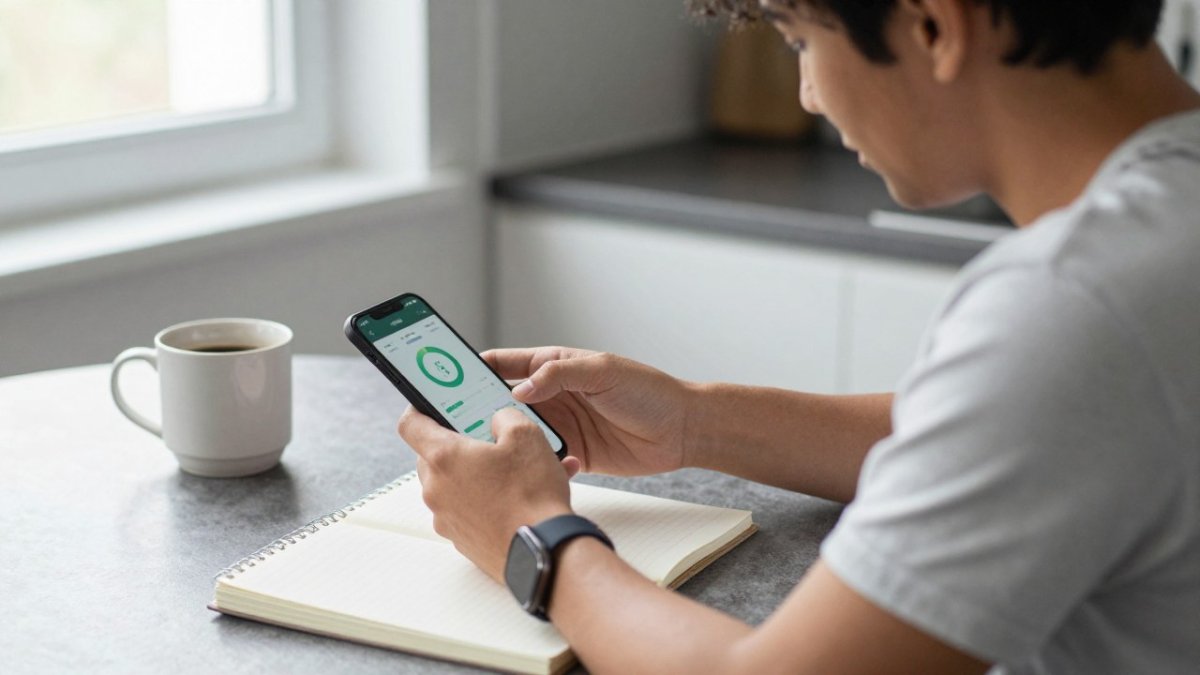
Why fragmented data keeps you stuck
Fragmentation is the quiet problem nobody names. Your sleep app says you slept badly. Your calendar says you had three late meetings. Your mood log says Tuesday was rough.
A common mistake is treating each metric as a verdict instead of a clue. Our article on contextual wellness data explains why that context matters and how it makes sense of your health signals.
What a Wellness Tracking App Should Do With Your Data
A wellness tracking app should turn collected data into an explanation, not a scoreboard. The minimum standard is three things: it connects inputs from multiple sources, it identifies patterns rather than isolated readings, and it suggests a next step you can actually take.
What separates a useful app from a decorative one is how it handles the messy middle: getting data out of your devices, reconciling it, and passing it along when a real question arises.
How data actually moves between your devices and apps
Think of connected wellness intelligence as a pipeline with four stages, each with its own failure points:
- Capture, a wearable, phone, lab report, or manual log records a signal. Wearables sample continuously; labs arrive as one-time documents; mood logs depend on you remembering to tap.
- Ingest, the app pulls that data in, usually through a vendor API or a health data platform on your phone. This is where device neutrality matters: if the app only accepts one brand, your other devices become dead weight.
- Reconcile, the app aligns timestamps, units, and definitions. A sleep session recorded by a ring and a watch rarely matches exactly, and a lab result may use different reference ranges than your last one.
- Interpret, the app looks across sources for patterns and surfaces a next step.
A common pattern is that the first two stages work reasonably well while the reconciliation stage is skipped. You can end up with several dashboards that each look authoritative but do not agree.
The data quality problems nobody warns you about
Even well-built apps inherit errors from their sources. A few you should expect:
- Wearable drift: optical heart-rate sensors struggle with motion and skin tone variation, and step counts vary between devices by meaningful margins. Treat any single reading as approximate.
- Manual entry gaps: mood and symptom logs are only as good as your consistency. A week of honest one-tap entries beats a month of sporadic detail.
- Lab timing: a result is a snapshot, not a baseline. Comparing a fasting lab to a non-fasting one tells you little.
Watch out: an app that presents every metric with equal confidence is hiding its uncertainty. Good tools show you when a reading is noisy or incomplete rather than smoothing it into a false certainty.
What to look for in any app
- Device neutrality: it accepts data from the wearable you already own, not just its own hardware
- Multi-source context: sleep, mood, activity, and labs in one record with clear provenance
- Plain-language pattern summaries: "your sleep drops on weeks with late meetings"
The last point is where most wellness apps go quiet. Numbers without a next step are entertainment. If you want a grounding in what the underlying metrics mean, our guide to understanding wearable data walks through the signals your device records and how to read them, and our breakdown of wearable data insights covers how those signals translate into changes worth making.
Sleep Tracking: The Foundation Most People Skip
Sleep tracking is the most useful starting point in connected wellness intelligence, because sleep affects nearly every other metric you record.
What most guides miss is that duration is the least interesting number. Consistency of timing, time spent awake after falling asleep, and how you feel on waking tell you more than a single total.
Watch out: chasing a perfect sleep score can backfire. Some people become anxious about the number, and that worry can disrupt the sleep it measures.
Stress Management Tools That Fit Real Life
Stress management tools only work if they survive a busy Tuesday.
The NHS guidance on stress, anxiety and depression is a sensible reference point for recognising when everyday stress needs more than a breathing exercise.
For readers who want that option without a long wait, our guide to online counseling for stress and anxiety explains what remote support looks like in practice.
The honest limitation: no app reduces stress on its own. Tracking shows you the pattern. The change still comes from what you do with it.
Mood Tracking and the Patterns Behind Your Energy
Mood tracking works when it is fast enough to be honest. A daily one-tap rating plus a short note beats a detailed questionnaire you abandon after a week.
Energy and mood move together, and both interact with sleep and stress. A holistic approach to monitoring treats these signals as one system rather than four separate dashboards, which is exactly what our guide to holistic health monitoring sets out.
A pattern worth watching for: mood dipping two days after poor sleep rather than the same day. That lag is common and easy to miss when you only review one metric at a time.
Where eeMeds Fits in the Wider Wellness Ecosystem
eeMeds is a personalized intelligence layer that connects the apps and devices you already use, rather than asking you to abandon them.
The eeMeds™ platform is designed to bring data from wearables, labs, medications, mood, sleep, stress, activity, metabolic health, goals, and routines into one wellness record.
Where this matters most is complexity. Someone managing a GLP-1 medication while also working on sleep and stress often has data spread across several places.
Privacy, Consent and Who Owns Your Health Data
Your health data belongs to you, and any platform worth using should make that easy to verify rather than simply assert.
The UK Information Commissioner's Office guidance on health data sets out the protections that apply to health information and what you can ask an organisation to do with yours.
A reasonable rule we would apply: if a wellness app cannot explain its data practices in plain language, do not connect your records to it.
Turning Connected Wellness Intelligence into a Next Step
Start smaller than you think you should. Pick one anchor metric, usually sleep, and track it consistently for two weeks alongside a one-line daily mood note. Add movement and stress context only once that habit holds. That advice is common, and it is only half the job. The other half, the part most guides skip, is knowing whether what you changed actually helped.
Distinguishing real improvement from noise
Wellness metrics move for reasons that have nothing to do with your choices: weather, travel, a stressful work week, a cold, or simply normal day-to-day variation. Before you credit a habit with a change, ask three questions:
- Is the change bigger than my usual swing? If your sleep score normally bounces within a range, a single good night proves nothing. Look for a shift that holds across two or more weeks.
- Did more than one signal move together? A real improvement usually shows up in at least two places, better sleep consistency alongside steadier mood, for example. One metric moving alone is often noise.
- Did the change survive a bad week? A habit that only works on calm weeks is fragile. The useful test is whether it holds when life gets busy.
A common pattern is mistaking a good week for a good habit. The fix is to review trends monthly, not nightly, and to resist rewriting your routine after every outlier.
A practical measurement routine
You do not need a research protocol. You need a repeatable loop:
- Choose one anchor and one companion metric. Sleep consistency paired with morning mood is a sensible starting pair.
- Set a baseline. Record two weeks before changing anything, so you know what normal looks like for you.
- Change one thing. Adjust a single evening habit, a fixed wind-down time, for example, and hold everything else steady.
- Review at two weeks and four weeks. Two weeks tells you if the habit is sticking; four weeks tells you if the metric is moving.
- Keep, adjust, or drop. If nothing moved, change one variable rather than adding a second habit on top.
| Question | What it reveals | What to do next |
|---|---|---|
| When is my sleep worst? | Timing patterns tied to routine | Adjust one evening habit and recheck |
| What precedes my low-mood days? | Lag effects from sleep or stress | Protect the preceding night |
| Which weeks feel hardest? | Workload and recovery mismatch | Plan lighter recovery in those weeks |
| Did my change hold across a bad week? | Whether the habit is robust or fragile | Keep it, or simplify it |
When to bring in a human
Data can tell you a pattern exists; it cannot always tell you why, and it should never be the only voice on something that matters.
That is the difference between collecting data and using it. Connected wellness intelligence is not a device you buy.
Most people are not short of health data. They are short of an explanation and a next step.
Frequently Asked Questions
What does connected wellness intelligence mean?
Connected wellness intelligence is the layer that pulls your sleep, mood, movement and lab data into one view, then explains how those inputs affect each other. Instead of five apps each showing a separate number, you see that a late meal, a short night and a stressful morning tend to travel together. The point is understanding, not more metrics: it helps you decide what to change first and gives you a realistic way to test whether the change worked.
How can I use wellness data to improve my sleep and manage stress?
Start with one variable at a time. Use sleep tracking to establish your normal bedtime and wake time for two weeks, then change one habit, such as cutting caffeine after midday, and watch whether your sleep score or your own morning rating shifts. Pair that with mood tracking so you can see whether stress is driving the poor sleep or the other way round. Stress management tools work best when they are tied to a specific trigger you have identified in your own data, not applied as a generic routine.
Can wellness apps replace advice from a healthcare professional?
No. A wellness tracking app can show patterns, prompt better questions and help you stay consistent, but it cannot diagnose a condition or adjust a prescription. That distinction matters most if you are managing diabetes, taking a GLP-1 medication or dealing with persistent low mood. Use the app to arrive at appointments with specifics, such as three weeks of sleep and mood data, and let a licensed clinician interpret them. Some platforms pair tracking with virtual consultations so the two sit side by side.
How can I track wellness without using a wearable?
Manual tracking is more useful than people expect. A short daily entry covering sleep quality, energy, mood and any stress trigger gives you a usable record within a few weeks, and it captures context a sensor cannot, such as an argument, a deadline or a skipped meal. Many wellness tracking apps accept manual entries alongside device data, so you can start with a notebook or a phone and add a wearable later if you want passive sleep and movement data.