 Ultimate guide
Can Wearables Help Monitor Your GLP-1 Progress?
Last Updated: October 25, 2026
Quick Summary
Wearables GLP-1 monitoring tracks continuous data on heart rate, activity, sleep, and glucose to reveal how your body responds to GLP-1 medication and lifestyle changes in real time, rather than capturing only single moments during periodic doctor visits. This objective data helps you and your healthcare provider identify medication effects, detect side effects early, and make informed treatment adjustments.
- Most people see weight changes within the first 4-8 weeks of starting GLP-1, but the rate varies significantly.
- Continuous glucose monitors reveal how GLP-1 improves glycemic outcomes through lower fasting glucose and reduced post-meal spikes.
- Wearables cannot directly measure appetite suppression, gastrointestinal effects, or medication adherence, requiring manual tracking to complement device data.
- Integrating fragmented wearable data from multiple apps into one unified view increases clinical utility and reveals meaningful patterns.
- Track weekly averages and 2-4 week trends rather than daily changes to reduce noise and identify actual medication and lifestyle effects.
Table of Contents
- How Wearables Support GLP-1 Monitoring
- Health Metrics to Track on GLP-1
- Continuous Glucose Monitor and GLP-1
- GLP-1 Side Effects Monitoring with Wearables
- What Wearables Cannot Measure
- Wearable Devices in Telehealth Care
- Integrating Wearable Data Into Your GLP-1 Journey
- Starting Your Wearable-Supported GLP-1 Tracking
- Frequently Asked Questions
How Wearables Support GLP-1 Monitoring
Wearable devices enable wearables GLP-1 monitoring by tracking continuous data streams, heart rate, activity, sleep, and glucose, that reveal how your body responds to GLP-1 medication and lifestyle changes. Unlike periodic doctor visits that capture a single moment, wearables offer a real-time window into your metabolic health.
When you start a GLP-1 medication, appetite shifts, energy fluctuates, and metabolism adjusts. Wearables document these shifts continuously, creating a detailed record you can review with your healthcare provider, transforming fragmented snapshots into a coherent narrative.
At eeMeds, we recognize that wearables work best when their data connects to your broader health picture rather than sitting isolated in separate apps. Our approach integrates wearable sensor data with lab results, medications, mood, sleep, stress, activity, metabolic health, goals, and routines to create a unified view of your GLP-1 progress.
Health Metrics to Track on GLP-1
When using GLP-1 medications, three metric categories matter most: weight and body composition, activity and energy expenditure, and sleep quality. Each reveals how the medication is affecting your body and whether your current approach is working.
Weight and Body Composition Changes
Weight tracking is the most obvious metric, but also the most prone to misinterpretation. Daily weight fluctuates with hydration, meal timing, and hormonal cycles. Wearables that measure body composition distinguish water weight, muscle, and fat mass, which matters because GLP-1 medications can affect lean muscle preservation, a factor daily weigh-ins cannot reveal.
Most people see weight changes within the first 4-8 weeks of starting GLP-1, but the rate varies. Tracking weekly averages rather than daily numbers reduces noise and reveals the actual trend. Some wearables let you log body measurements, clothing fit, and how you feel, factors that often matter more than the scale for motivation and adherence.
Watch out: Rapid weight loss in the first weeks is often water and glycogen depletion, not fat loss. This pattern is normal but can be psychologically misleading if you expect consistent weekly losses.
Activity and Energy Expenditure
GLP-1 medications often change energy levels unpredictably. Some people report increased energy; others experience fatigue or reduced motivation for physical activity. Wearables track step count, distance, and estimated calorie expenditure, showing whether your activity level is rising, falling, or stable.
The real insight comes from comparing activity patterns to weight changes. If you're losing weight while activity stays constant, the medication is driving metabolic changes. If weight loss stalls but activity increases, you may need to adjust your approach.
Activity tracking also reveals behavioral shifts. Some people naturally move more as appetite decreases and nausea subsides; others must intentionally maintain activity to preserve muscle mass. Your wearable documents which pattern applies to you.
Sleep Quality and Recovery
Sleep quality often improves on GLP-1, but not always immediately. Some people experience disrupted sleep in the first weeks due to nausea or medication adjustment. Wearables that track sleep stages, heart rate variability, and duration provide objective data on whether your sleep is actually improving.
Sleep data matters because poor sleep can slow weight loss and increase appetite, potentially counteracting the medication's effects. If your wearable shows declining sleep quality despite other positive changes, that's a signal worth discussing with your healthcare provider.
Three metric categories reveal how GLP-1 medication affects your body and whether your current approach is working.
| Metric Category | What It Shows | Key Timing or Note |
|---|---|---|
| Weight and body composition | Water weight, muscle, and fat mass changes | Most changes occur within first 4-8 weeks |
| Activity and energy expenditure | Step count, distance, calorie expenditure | Reveals whether medication or behavior drives weight loss |
| Sleep quality and recovery | Sleep stages, heart rate variability, duration | Poor sleep can slow weight loss and increase appetite |
Continuous Glucose Monitor and GLP-1
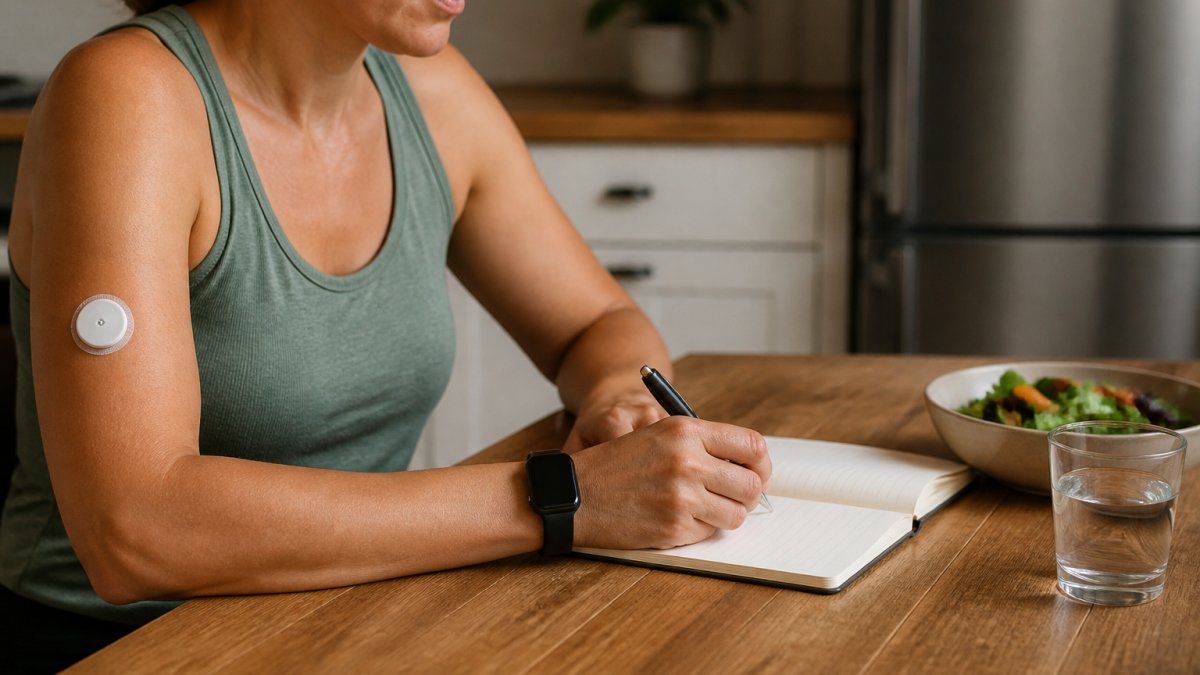
A continuous glucose monitor (CGM) is arguably the most valuable wearable for GLP-1 users. Unlike fingerstick testing, a CGM measures blood glucose continuously, revealing patterns single measurements cannot capture.
GLP-1 medications improve glycemic outcomes by slowing gastric emptying and increasing insulin secretion, effects that appear clearly in CGM data: lower fasting glucose, reduced post-meal spikes, and more stable glucose throughout the day.
The real power of CGM data lies in identifying your personal glucose patterns. Some people discover certain foods trigger larger spikes despite the medication; others find their glucose stays stable across meals they previously thought problematic.
CGM data also reveals how activity, sleep, and stress affect your glucose.
GLP-1 Side Effects Monitoring with Wearables
GLP-1 medications can cause side effects, nausea, constipation, reduced appetite, and occasionally rapid heartbeat, that wearables can help monitor. While wearables cannot directly measure nausea or gastrointestinal symptoms, they capture physiological responses that correlate with side effect severity.
Heart rate variability (HRV) and resting heart rate are particularly useful. Some people experience elevated resting heart rate on GLP-1, a sign worth discussing with their provider.
Sleep disruption frequently accompanies GLP-1 side effects, especially in the first weeks. If your wearable shows declining sleep quality, increased nighttime heart rate, or reduced REM sleep, your body may be struggling with the medication.
Activity level changes can also signal side effects. If you're normally active but your wearable shows a sudden drop in movement, that may reflect nausea or fatigue rather than motivation loss.
What Wearables Cannot Measure
Understanding the limits of wearable data is as important as understanding its strengths. Wearables excel at capturing continuous physiological signals, but they cannot measure several critical aspects of GLP-1 treatment.
Appetite suppression, the primary mechanism of GLP-1 medications, is invisible to wearables. Your device cannot tell whether you're eating less because you feel full or because you're restricting calories.
Gastrointestinal effects, nausea, constipation, diarrhea, cannot be measured by wearables. Sleep and activity data might correlate with GI distress, but only your subjective report captures what's happening.
Medication adherence is another blind spot. A wearable shows your glucose improved, but cannot confirm whether you took your injection on schedule or skipped doses.
Psychological factors, mood, motivation, stress, are partially visible through HRV and sleep data but not directly measurable.
Wearable Devices in Telehealth Care
Telehealth creates a natural partnership with wearable devices.
The most effective telehealth-wearable integration works like this: you wear your devices continuously, your data syncs to a platform accessible to your provider, and during your virtual visit, you both review it together.
Research on remote patient monitoring effectiveness shows that patients who share continuous health data with their providers achieve better outcomes than those relying on periodic check-ins.
eeMeds connects wearable data with telehealth through our eeTeleHealth Plus™ service, allowing your licensed healthcare provider to review your metrics before your appointment and make informed recommendations.
This transforms telehealth from a convenient alternative to in-person care into something more powerful: continuous monitoring with periodic expert interpretation. Your wearable sees your body continuously; your provider sees the meaningful patterns during scheduled visits.
Integrating Wearable Data Into Your GLP-1 Journey
Integrating wearable data into your GLP-1 treatment requires more than wearing a device. It requires connecting that data to your clinical care, lifestyle choices, and treatment goals.
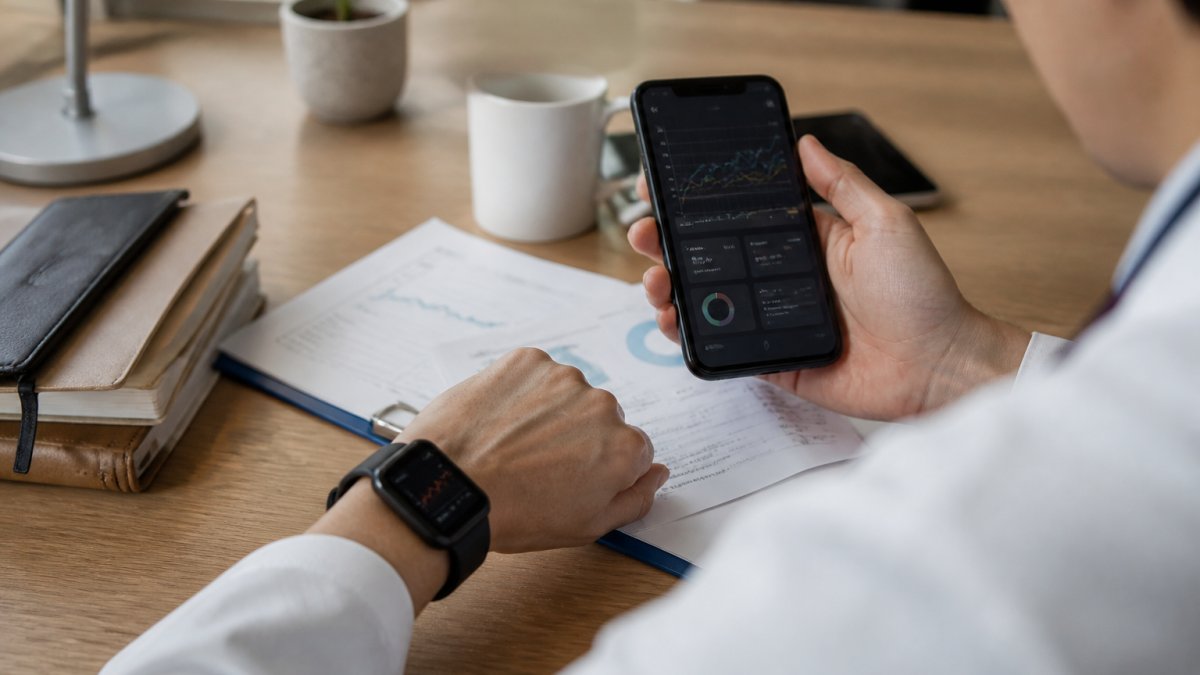
The process begins with choosing devices that measure metrics relevant to your situation. For weight loss, a body composition scale and fitness tracker make sense.
Once data is flowing, the next step is synthesis. Find recommendations for the best app for your wearable data to help you choose devices that work together seamlessly.
Guidelines on data integration in personalized medicine emphasize that fragmented health data reduces clinical utility.
This is where integrating wearable data with your GLP-1 journey becomes practical.
Start by identifying which metrics matter most for your goals. If you're using GLP-1 for weight loss, weight, activity, and appetite patterns matter most.
Starting Your Wearable-Supported GLP-1 Tracking
Beginning wearables GLP-1 monitoring requires establishing baseline measurements before or immediately after starting medication.
Before starting GLP-1, measure your current state: your typical daily step count, sleep duration and quality, resting heart rate, and weight.
Once you start GLP-1, resist the urge to obsess over daily changes. Weight, glucose, and energy fluctuate naturally.
Your wearable data becomes most valuable when shared with your healthcare provider.
Best practices for patient-provider data sharing in digital health recommends that patients take an active role in interpreting their data rather than passively collecting numbers.
eeMeds supports this process through eeMeds platform features that unify your wearable data with your medical records and medication history.
The goal of wearable-supported GLP-1 monitoring is not perfect data collection.
Starting your GLP-1 journey with wearable support gives you real-time visibility into your progress and helps your healthcare provider make better clinical decisions.
Frequently Asked Questions
Can a smartwatch monitor how well GLP-1 medication is working?
A smartwatch cannot directly measure GLP-1 effectiveness, but it tracks related metrics that reflect treatment progress. Weight trends, activity levels, and sleep quality often improve as GLP-1 works. Continuous glucose monitors paired with wearables provide more direct glucose data. The most reliable measure of GLP-1 effectiveness remains clinical labs (HbA1c, lipids) reviewed with your healthcare provider, combined with wearable data that shows behavioral and recovery trends.
What health metrics should I track while taking a GLP-1 medication?
Track daily weight and weekly trends, daily step count and active minutes, sleep duration and quality, heart rate patterns at rest and during activity, and any nausea, appetite changes, or energy shifts. Continuous glucose monitors show real-time blood glucose and glycemic patterns. Mood and energy logs help correlate medication side effects with your daily experience. Share these trends with your healthcare provider at each visit to refine your treatment plan.
Are continuous glucose monitors useful for people taking GLP-1 medication?
Continuous glucose monitors are highly useful on GLP-1 therapy. They show how well your blood glucose is controlled, reveal patterns you might miss with fingerstick testing, and help your provider assess whether your current dose is working. CGMs also detect hypoglycemia risk early. If you have diabetes or prediabetes, a CGM paired with wearable activity data gives a complete picture of metabolic response to GLP-1 and lifestyle changes.
Can wearables detect GLP-1 medication side effects?
Wearables cannot directly detect nausea or gastrointestinal side effects, but they can reveal secondary patterns. Reduced sleep quality, elevated resting heart rate, or sudden drops in activity may correlate with side effects. Heart rate variability can indicate stress or physical strain. A journal app paired with wearable data helps you spot when symptoms occur relative to doses, meals, or activity. Always report side effects directly to your healthcare provider rather than relying on wearable interpretation alone.
How often should I review wearable data with my healthcare provider?
Review wearable trends with your provider at each scheduled visit, typically every 4-12 weeks depending on your treatment plan. Before each appointment, summarize weekly averages for weight, activity, sleep, and glucose (if monitored). Highlight unusual patterns or concerns. Between visits, contact your provider if you notice sudden changes in metrics or new side effects. Virtual care platforms can streamline this process by syncing wearable data directly into your medical record for provider review.
Can I rely on wearable data instead of lab tests while on GLP-1?
No. Wearables track daily wellness patterns but cannot replace clinical labs. Your provider needs HbA1c, lipid panels, kidney function, and liver function tests to assess GLP-1 safety and effectiveness. Wearable data complements lab results by showing real-time behavior and recovery trends, but labs provide the definitive clinical picture. Together, wearables and labs create a complete monitoring strategy that supports better treatment decisions.
What should I do if my wearable data conflicts with how I feel?
Trust your symptoms first. If you feel unwell but your wearable shows normal metrics, or vice versa, report both to your healthcare provider. Wearables measure specific physiological signals and may miss context like medication side effects, stress, or illness. Your subjective experience is clinically important and should never be ignored. Your provider can investigate discrepancies and adjust your care plan accordingly. Never change your medication or dose based on wearable data alone.